Saturday, September 21, 2019

The Language of Collaborative Reflection


Coaches support collaborative reflection when they offer opportunities for teachers to share their work and problem-solve together.  Last week’s post talked about the “5 P’s” for productive conversations. When these characteristics are the norm, we listen to and understand each other better.

Of course, listening only works when someone is talking!  So teachers need to balance listening with sharing during collaborative reflection.  As each member of the group puts his or her own ideas on the table, using phrases such as, “Here is one idea…” or “Another consideration might be…” helps to keep the conversation open.  Both inquiring into the ideas of others and advocating for one’s own ideas are important to productive dialogue.

As the conversation unfolds, asking one another questions helps us stay open to new ideas.  Teachers can ask, “What if…?”  Would it be possible to…?” or, “If we (did this), then could students…?   To assure that conclusions are well-founded, member of the team can ask clarifying questions.  Asking a colleague to “say more about that” or to respond to the query, “Why do you think that?” helps us to make meaning and recognize best practices.

As a coach, you can model this kind of language and also have an explicit conversation about its benefits.  Including sentence stems like these in a box on the agenda can be a good reminder to everyone.

Reflecting collaboratively increases collective efficacy – the belief that what we do as teachers makes a difference for student outcomes.  Research by John Hattie shows that collective teacher efficacy is strongly correlated with increased student achievement – three times more powerful and predictive of achievement than student motivation, socio-economic status, or home environment and parental involvement!  When teachers get smarter together, so do their students.  That’s why the language of collaborative refection deserves special attention. 

------------------------------------------
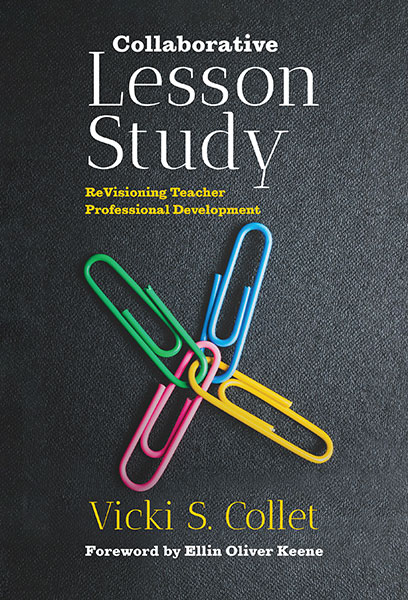
Teacher collaboration and reflection are things I’m passionate about!  You can read more about it in my book, Collaborative Lesson Study, which is now two weeks old.  J  It’s available here (20% discount code is TCP2019).  If you’d like to join the free Facebook book club for the book, click hereDiscussion begins Sept. 27 with Chapter 1.
------------------------------------------

This week, you might want to take a look at:

Research book clubs for “pretend” readers:


A teacher talks about learning from coaching feedback:


Layering texts with Padlet to build background knowledge:


A good description of the “Stop & Think” comprehension strategy:


Was this helpful?  Please share!
Want to know about new posts? Click “Follow” (bottom right)
Like on Facebook at: facebook.com/mycoachescouch for more coaching and teaching tips!

Friday, September 13, 2019

Collaborative Reflection


Last week’s post described the power of individual reflection. This week, let’s think about possibilities when coaches support collaborative reflection.

Building time for collaborative reflection into team coaching cycles provides authentic opportunities for teachers to share their work and problem-solve together.  You will create and sustain a collegial community and teaching repertoires will expand as you think together about student learning.

Because teachers spend most of their workweek alone, you’ll need to be intentional about collaborative reflection. The “Five Tools for Listening” provide reminders for keeping conversations productive. These five P’s (pausing, paraphrasing, probing, presuming positive intentions, and paying attention to self and others) are guides for listeners during collaborative reflection. Using these tools supports dialogue, assists the group in hearing and understanding one another, and encourages collaborative decision-making.  

Pausing: Pause before responding. Knowing you will pause, you can give your full attention to listening. The pause is your thinking time to process what you have heard.

Paraphrasing: Briefly summarize what your colleague said. This demonstrates your attention and is a check for understanding. You can use a paraphrase starter like, “So, you’re thinking . . . .”

Probing: Ask for clarification or elaboration by using phrases such as, “Please say more about . . . ” or “I’m interested in . . . ” Responses to these probing questions make thinking more concrete.

Presuming Positive Intentions: Assume that others’ intentions are positive. Trust your colleagues.

Paying attention to self and others: Stay aware of what is being said and how others are responding.

I’ve found it helps to review the Five P’s from time to time or have them posted in the team meeting room. 

Of course, these listening tools will only be useful if someone is talking!  Encourage teachers to balance listening with sharing during collaborative reflection.  When teachers put their own ideas on the table, using phrases such as, “Here is one idea…” or “Another consideration might be…” keeps the conversation open to additional suggestions.  Talking about the benefits of using phrases like these, and modeling them as coaches, helps to develop norms for productive collaboration.

Both inquiring into the ideas of others and advocating for one’s own ideas are important as teachers reflect together.  Author and teacher Jan Johnson suggestions, “It’s not our experiences that bring transformation, it’s our reflection upon our experiences.”  Collaborative reflection supports a change cycle of continuous improvement. 

------------------------------------------
Teacher collaboration and reflection are things I’m passionate about!  You can read more about it in my book, Collaborative Lesson Study, which is now one week old.  J  It’s available here (20% discount code is TCP2019).  If you’d like to join the Facebook book club for the book, click here.  Discussion begins Sept. 27 with Chapter 1!
------------------------------------------

This week, you might want to take a look at:

Checklists as targets for writers’ learning:


How do you know if students are engaged?  Ask them!


Coaching for flexibility:


Watch teacher learn from each other on “learning walks”:


Talks with Teachers podcast with Sarah Donoval, who shares her story and why vulnerability is important in the classroom:


That’s it for this week.  Happy Coaching!

Was this helpful?  Please share!
Want to know about new posts? Click “Follow” (bottom right)
Like on Facebook at: facebook.com/mycoachescouch for more coaching and teaching tips!

Saturday, September 7, 2019

Turning On the Power of Reflection


Some teachers seem to be natural reflectors; their minds automatically review and evaluate their teaching experiences – sometimes it happens even when they wish they could turn it off!  But for others, reflection requires more deliberate planning.  Coaches can provide time and space for teachers to consider their students and their own daily work, to think about the content and process of teaching. Professional learning experiences are effective when they encourage teachers to reflect on and discuss their students’ thinking and learning.

Reflection is the act of recapturing one’s experience, mulling it over and evaluating it in order to learn about one’s practice. Reflection on practice is a critical step for improved instruction. It helps teachers move toward a more reasoned (less intuitive) stance, weighing evidence and clarifying goals.

As you support reflection, you help teachers think through the learning process and deconstruct the instructional moves that made an impact. Together, you will recognize areas that need strengthening, consider alternatives, and re-vision instruction.

Reflecting soon after a lesson helps us synthesize ideas and capture fleeting thoughts while they are still fresh.  As we reflect with teachers, we think about what we have just seen and sometimes challenge our judgments and draw new conclusions.

Be sure to encourage teachers to think about what went right in the teaching – strategies they want to use again. Often, teachers’ inclination is to reflect only on things they would change. While that is important, much can be learned from thinking about what went well. As we temporarily set aside negative judgments, we’ll gain insight about effective instruction.

Teachers who take time for mindful reflection are more likely to self-correct their own teaching skills.  Reflection gives teachers the chance to consider recent teaching in relation to past experiences, opening opportunities for you and your colleague to thinking deeply together. Whether a teacher is a natural reflector or one who needs a nudge to turn on the power of reflection, having a coach as a reflecting buddy can strengthen the process!

------------------------------------------
Teacher reflection is something I’m passionate about!  You can read more about it in my book, Collaborative Lesson Study, which launched yesterday! It’s available here (20% discount code is TCP2019).  If you’d like to join the Facebook book group for the book, click here.  Discussion begins Sept. 27 with Chapter 1!


This week, you might want to take a look at:

Using books to help students reflect:


Tips to help coaches get pumped for the school year:


This video describes new research supporting the positive effects of growth mindset:


Ideas for making anchor charts more student-centered:


Short writing assignments to help students become better thinkers (in all disciplines):


That’s it for this week.  Happy Coaching!

Was this helpful?  Please share!
Want to know about new posts? Click “Follow” (bottom right)
Like on Facebook at: facebook.com/mycoachescouch for more coaching and teaching tips!

Saturday, August 31, 2019

Driving in the Slow Lane: Observation in the Coaching Cycle


Often, during coaching cycles, coaches observe teachers. That’s helpful in that it may allow us to offer recommendations, ask thought-provoking questions about the learning, and affirm or praise things that went well.  But I’m more and more convinced that giving the teacher the chance to be on the observing end is a coaching practice I can’t live without!

Observing a lesson in action can sharpen teachers’ attention to student learning and broaden their instructional repertoires. Observation supports inquiry and provides opportunities to further develop their teaching craft.

When observing, teachers are freed from the ongoing, intensive brainwork of on-the-spot decision-making. As an observer, they don’t have to worry about what the student on the other side of the room is doing or get materials ready for what will come next in the lesson.  They can give their energy to watching and listening. As Shelley Harwayne describes, observers have the chance to drive in the slow lane,* deciding what they will pay attention to and when.

During observation, teachers can be encouraged to both look at the big picture and also to lean in to look more closely.  They can note the arrangement of the room and how the choreography of the lesson is playing out, then zoom in to focus on the work of one group or one student.  These are the benefits of being an observer.

Effective observation starts with wondering. During a pre-observation meeting with the teacher, review the lesson and discuss what you are wondering about. Will students grasp the concepts as intended? Will they find the work interesting? Together, review the lesson plan with an eye toward what to watch for.  Consider the planned learning activities, how you anticipate students will respond to these activities, and what you should both be sure to notice along the way. You can simulate the lesson in your mind, imagining together how students will respond to questions. You can consider processes students might use and missteps they might take. 

Observing a lesson in action opens the door to new possibilities. Through observation, teachers can soak up ideas and sharpen their vision for student learning.  If you are usually the one doing the observing during coaching rounds, it’s worth turning the tables and giving teachers the opportunity to observe.  That’s the modeling phase of the GIR model.  It can be the initial step in a coaching round or one you return to as you see the opportunity for a teacher to glean the benefits of driving in the slow lane.

----------------------------------

Giving teachers the opportunity to observe is something I’m passionate about!  You can read more about it in my book, Collaborative Lesson Study, that LAUNCHES THIS FRIDAY!  I’M SO EXCITED!  The book is available here, and the 20% discount code is still good: TCP2019.  Please indulge me in celebrating this book.  I’m so excited to share what I’ve learned!

*Harwayne, S. (2000) Lifetime Guarantees. Portsmouth, NH: Heinemann.


This week, you might want to take a look at:

Strategies for building relationships with hard-to-reach teachers:


Taking  “status of the class” online:


The Frayer model for learning vocabulary (great for content-area learning):


Wow students with positive messages about their upcoming learning:


Core routines for making thinking visible:


That’s it for this week.  Happy Coaching!

Was this helpful?  Please share!
Want to know about new posts? Click “Follow” (bottom right)
Like on Facebook at: facebook.com/mycoachescouch for more coaching and teaching tips!

Friday, August 23, 2019

You've Got Mail


After the dust has settled at the beginning of the school year, you might want to consider using a few minutes during a staff meeting to start a letter-writing campaign – with all the letters addressed to you!

Your work throughout the year will be more purposeful and effective if teachers pause now to give you some insight about their own priorities.  So pass out some stationary and give a few prompts; put on some soothing writing music and be sure to have a few pens on hand (just in case!).  Here are some things it might be helpful to know:

·         What’s one thing that worked so well last year that you want to be sure to do it again?
·         What’s one thing you believe about your students?
·         What’s another thing you believe about your students?
·         What’s one thing you believe about teaching?
·         What’s another thing you believe about teaching?
·         Is there a teaching practice you are wondering about?
·         Is there something you feel you put too much emphasis on last year?
·         Is there something you want to do differently this year?
·         What do you hope your students will remember when this year is over?

Use these prompts or come up with your own.  The important thing is that you give teachers time to pause so that they can give you a glimpse of their hopes and dreams.  Don’t just ask them to email it to you or put it in your box.  Teaches have so many priorities this time of year that they’ll need the gift of think time to get these ideas worked out. 

Once you collect the letters, you’ll have a treasury to sort through that will help you know how to focus your energy as you work with teachers this year.

This week, you might want to take a look at:

Some musical inspiration about the power of letters:  J


A video reminder that getting students’ names right matters:


Suggestions for seeking feedback as a coach:


The importance of choice in writers’ workshop:


Tips for starting the year as a new (or continuing!) instructional coach:


That’s it for this week.  Happy Coaching!

Was this helpful?  Please share!
Want to know about new posts? Click “Follow” (bottom right)
Like on Facebook at: facebook.com/mycoachescouch for more coaching and teaching tips!


Friday, August 16, 2019

Alignment


Think of a time recently when someone offered you praise. What did they say? (Can you think back to their specific words?)  How did you feel? 

After class today, a student, Adison, was reflecting on what we’ve been learning, and she said to me, “It’s as if I was reading things on a surface level and now I have gone beneath the surface and dove into the actual meaning behind everything, and it really has made me enjoy learning a lot more!”

Adison’s words resonated with me because they aligned with my own goals: I hope to support students’ deep understanding, not just give them a surface-level knowledge of the content.  I took this praise to heart. I was smiling, inside and out!  And more than that, Adison’s praise caused me to stop and reflect on the learning experiences that might have supported Adison’s learning.  I want to be sure to repeat things that work!

It’s like this when coaches give feedback to teachers, too. When the praise coaches give aligns with what teachers value, it gets more uptake. In a pre-observation meeting, we can listen for what the teacher values.  What are they hoping the lesson will achieve? What is their philosophy about how learning occurs?  Figure this out and look for points of intersection.  Where do the teacher’s values align with your own?  What is it that the teacher is looking for that you want to see, too?  Finding alignment between your own values and those of the teacher means that your praise with be authentic.

Here’s a non-example: If a teacher values giving a great lecture that keeps listeners on the edge of their seats, but you value student participation, your praise of their entertaining saga will probably not ring true.  You’ll have to dig deeper for something you both value.

At the beginning of this post, I asked you to reflect on being a recent recipient of praise.  Now flip that. Can you remember a time when you recently offered praise?  It’s fine if it was not in a professional setting.  I just want to encourage you to think of a recent experience with giving praise. Who did you praise?  What did you praise?  What was the recipient’s response?  How did you feel?  If the response and feelings were positive, chances are their was alignment between your values and those of the recipient.

The beginning of the school year is a great time to check your alignment. By listening and asking questions, you can gain a better understanding of what each teacher you are working with values. Plan a way to keep track of these values (not just in your head!). As authentic opportunities arise, practice praising in ways that align with what teachers care about.  Adjusting your alignment can keep you moving straight ahead in your coaching work!


This week, you might want to take a look at:

Building a support network for YOURSELF as a coach:


Why complaining about students is toxic:


An entertaining video with advice to first-year teachers:


You’ve got to read this blog with a valuable perspective about reading difficulties:


The relationship between trust and feedback:


That’s it for this week.  Happy Coaching!

Was this helpful?  Please share!
Want to know about new posts? Click “Follow” (bottom right)
Like on Facebook at: facebook.com/mycoachescouch for more coaching and teaching tips!

Friday, August 9, 2019

Slushiness


The ‘dog days of summer’ are upon us, with all their final outings and back-to-school preparations.  The heat lingers even as the summer break comes to a close.  It seems like the perfect time to talk about slushiness.

I was introduced to this word, in the context of teacher change, a few years back when learning about the work of Kurt Lewin*, who talks about change in 3 steps: unfreeze-change-refreeze.  The slushy space between being frozen in old practices and solid in new ones is an important phase of teacher change.

For a long time, I’ve talked about coaches as being in the change business.  We wouldn’t have a job if someone didn’t want someone to change (and hopefully these someone’s are one and the same!).

However, I’ve always recognized that the word change doesn’t usually have welcoming connotations.  I don’t know many people who would say they are actively seeking change in their lives, who ask for it, want it, embrace it.  Change just isn’t a cozy concept.

But how about slushiness.  That’s a pretty good word for August, isn’t it?  Are you ready to invite some slushiness into your life? Into your work?  Are you okay with things getting a little slippery and sloshy?  Can you entice the teachers you are working with to crave such messiness? Because that’s what it might take to do something better, to become something new.

Instead of being in the change business, how about if we coaches consider ourselves to be supporting the process of becoming?  What are you striving to become?  What do the teachers you work with want to become, professionally? Who do they want to be as an educator?

I am loving the idea of becoming and the role of slushiness in that process.  If you see potential in this idea, you might serve up something slushy at your next meeting and launch everyone on a road to becoming even better versions of the professionals they already are.  Then get ready to support teachers as they muck about in new ideas.  It sounds like a delicious process!

*Lewin K (1947) Group decision and social change. In: Newcomb TM and Hartley EL (eds) Readings in Social Psychology. New York: Henry Holt, 330–344.

This week, you might want to take a look at:

Decorations vs. anchor charts:


How mentors help first-year teachers:


Questions to guide reflection about data:


Ways to engage in professional learning (without worry about time and place constraints): 


For narratives - 33 ways to write stronger characters:

https://www.well-storied.com/blog/write-stronger-characters

That’s it for this week.  Happy Coaching!

Was this helpful?  Please share!
Want to know about new posts? Click “Follow” (bottom right)
Like on Facebook at: facebook.com/mycoachescouch for more coaching and teaching tips!