Saturday, February 20, 2021

Asking the Miracle Question


Solution-focused coaching encourages teachers to center their thinking on fixes and possible futures rather than dwelling on problems or past mistakes. I use a list of questions that take this forward-thinking approach:

·       What would need to change in order for that to happen?  For example,

o   What would have to change for students to work more for themselves and less for you?

o   What would have to change so that students talked more to each other, and less to you, during whole-class discussions?

·       How else might you do?  For example,

o   How else might you vary the introduction to the lesson to keep students excited about their practice?

o   How else might you help students visualize that concept?

·       What are some other ways that might be done? For example,

o   What are some different ways you might check for understanding?

o   What are some other ways you might support him?

·       What are some of the things you might try?

·       What might you have to do to get your students there?

·       What might the benefits be?

·       What is missing?

Questions like these have worked well for coaching teachers forward.  But this week I learned about a question that I can’t wait to try. It’s called “the Miracle Question,” and I think I know why!  

The miracle question or “problem is gone” question, asks the teacher to envision and describe in detail how the future will be different when the problem is gone!  The conversation goes something like this: “Imagine that, in the middle of the night, a miracle happens and the problem we were talking about is solved!  But, because it got solved while you were sleeping, you have no idea that the problem no longer exists.  What would you notice? What are the small changes that would give you hints about the miracle? 
 
As teachers give a moment-by-moment account of what the day would be like with this miracle in place, they begin to uncover steps they might take to make it so!  Envisioning that this hoped-for future has already arrived can help the details of a plan fall into place.  I’ve done something like this using the Back-to-the-Future protocol for long-range planning with groups, and it was worked remarkably to help us think about what we want our organization to be like in five or ten years. It’s even fun to start talking in the present tense, pretending this hoped-for future is already in place.  Based on my success with the Back-to-the-Future protocol with groups, I’m excited about using the Miracle Question for shorter-term individual coaching conversations. In fact, I’ve been asking myself the Miracle Question: What will it be like if I use the Miracle Question in my coaching conversations next week?

This week, you might want to take a look at:
 
Risks of using the “at-risk” label:
 
https://theconversation.com/why-its-wrong-to-label-students-at-risk-109621
 
 
Ideas for teaching high-frequency words:
 
https://twowritingteachers.org/2019/11/06/snap-word-train/
 
Fixing broken classroom routines:
 
http://www.ascd.org/ascd-express/vol13/1321-handley.aspx
 
 
Why coaches should model learning:
 
https://barkleypd.com/blog/leaders-modeling-professional-learning/
 
 
Ed Tech and virtual reality:
 
https://www.verizon.com/about/news/ed-tech-trends
 
 
That’s it for this week.  Happy Coaching!
 
Was this helpful?  Please share!
Want to know about new posts? Click “Follow” (bottom right)
Follow on Facebook at: facebook.com/mycoachescouch or Twitter @vscollet for more coaching and teaching tips!  You can also find me at VickiCollet.com

Tuesday, February 16, 2021

Coaching Out of Deficit Mindsets


Trigger words are words that make someone pay attention; they compel a person to act. They are a tool for advertisers, and they can be an invitation for coaches.  

A trigger word that gets my attention and compels me to act is “lazy.” When I hear this word used to describe students, I first have to swallow a bit of anger that tends to rise up. I hate to hear that label applied. Children come into the world full of curiosity and energy. Sometimes schools or situations reduce that drive. But, if that’s happened, it is teachers’ job to reignite that fire. Labelling students as lazy is not a step in that direction.

The “lazy” label came up last week as I was working with a group of fourth-grade teachers. The emotions triggered by that word put my mind in such a fog that I don’t have a clear memory of how I responded. But (unfortunately), this was not the first time I have worked to coach teachers out of this negative mindset.

A couple of years ago, as a group of eighth-grade math teachers sat around the planning table, I asked, “What do you know about these eighth graders as mathematicians?”

“They’re lazy,” a teacher replied.

I probed and prompted until the teacher changed her stance: “"You know, sometimes they're hesitant because they don't have the skills. They don't remember."  This more-productive comment led to a long discussion about working memory and opportunities for practice and partner work that could strengthen students’ skills.

I later got an email from the district’s instructional leader, who had been in the room during the conversation. “I really don’t like the (teachers’) first response to be that (the students) are lazy,” she said, and continued: “Unfortunately, I think you heard a version of that in each building. You did a great job helping teachers see the students’ responses in a different light.”

Thankfully, I had been able to turn that situation around a bit. But my foggy-brained response this week got me thinking that I needed to have a well-prepared approach for coaching teachers out of negative mindsets. That’s why I was thrilled when I learned about a 4-step process for speaking up against bias. It works for that important topic, and I could see that I had unknowingly used this approach in previous conversations with teachers. Naming and knowing the four steps will help me support teachers better when they express negative mindsets about students.  Here are the four steps:

1)    Interrupt. In the conversation with eighth-grade math teachers, this meant stopping the planning conversation to address the mindset. Interrupting means taking time out to address a concerning comment before moving on.  It could sound like, “Just a second, could we back up and talk about something I heard?” 

2)    Question.  The goal here is to understand why the teacher made the comment. It might sound like, “I wondered why you called students ‘lazy’? What makes you say so?” By asking a question, you are giving the teacher a chance to explain and maybe even recognize on their own the negative mindset they are speaking from.

3)    Educate. This would be the time to explain how the term perpetuates unhelpful thinking. Related to “laziness,” I could share what Carol Dweck, who has extensively studied the growth mindset, said: “Everyone is born with an intense drive to learn…They never decide it’s too hard or not worth the effort…They walk, they fall, they get up. They just barge forward. What could put an end to this exuberant learning? The fixed mindset.” Negative mindsets, in teachers and in the students themselves, get in the way of learning.

4)    Echo. The final stepped in this process is to amplify other voices that address the issue. According to Learning for Justice, this especially means amplifying voices of those who are being negatively described. In the “lazy” example, this might mean asking students about what motivates them, or even asking how they would feel if a teacher called them, “lazy,” and then reporting these findings back to the teacher community.  I haven’t tried this step, but it sounds promising!

Now that I’m prepared with a step-by-step process to address negative mindsets, I think I’ll have a cooler head the next time I hear a trigger word that makes me want to stop a teacher in her tracks. And actually, that’s exactly what I should do! These steps can coach teachers out of judgment frameworks and into more productive frameworks for teaching and learning.

This week, you might want to take a look at:
 
What education leaders can do to reduce teachers’ stress:
 
http://www.ascd.org/ascd-express/vol15/num13/educator-stress-is-a-leadership-challenge-heres-what-leaders-can-do-about-it.aspx
 
Designing student-centered learning from an empathy-based approach:
 
https://katielmartin.com/2021/01/24/are-we-designing-for-learning-or-for-school/
 
 
Teaching activities with Jamboard:
 
https://classtechtips.com/2020/12/30/jamboard-activities/
 
 
Real books in kids’ hands during face-to-face and remote learning:
 
https://teachersbooksreaders.com/2020/11/04/choice-still-matters/
 
 
Why coaches should model learning:
 
https://barkleypd.com/blog/leaders-modeling-professional-learning/
 

That’s it for this week.  Happy Coaching!

Was this helpful?  Please share!
Want to know about new posts? Click “Follow” (bottom right)
Follow on Facebook at: facebook.com/mycoachescouch or Twitter @vscollet for more coaching and teaching tips!  You can also find me at VickiCollet.com


x

Saturday, January 30, 2021

No Fuzzy Objectives

Helping a teacher get clear about learning objectives may be the most important work a coach does during a planning conversation.  When a teacher is clear about objectives, she can select activities that will be most likely to guide her students there. When she is clear about objectives, she can be flexible in the midst of a lesson – deciding to back up to lay additional groundwork, correct misconceptions, or scrap something that isn’t working. Carol Tomlinson said, “A fuzzy sense of the essentials results in fuzzy activities, which in turn results in fuzzy student understanding. That’s the barrier to high-quality teaching and learning.”*
 
When a teacher has clarity about student outcomes, the learning activities selected will be likely to lead to stronger skills and clear understanding of ideas. Instructional outcomes should represent high expectations for student learning and focus on important aptitudes and ideas. 
 
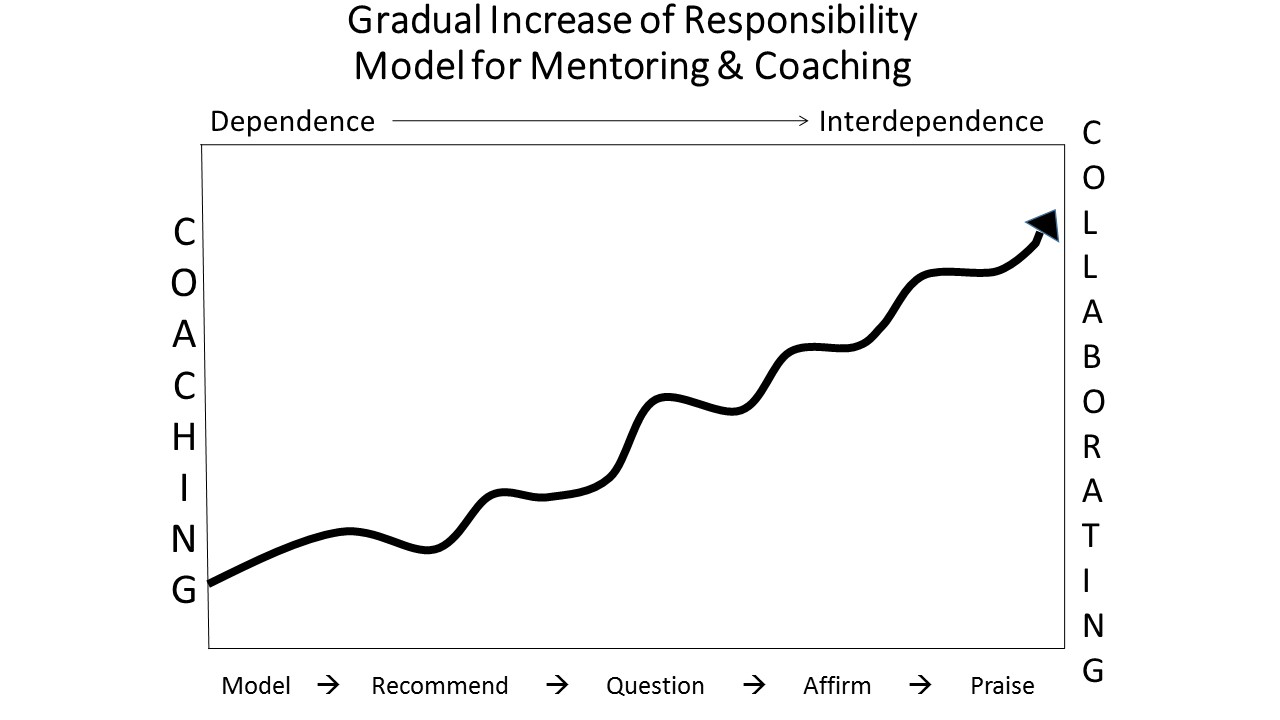
The teachers you are working with will need different support from you to ensure clear and meaningful objectives guide each lesson. Some teachers may benefit if you model the expert thinking that guides selection of objectives.  It’s like doing a read aloud with objectives – saying aloud what is going on so automatically in your head as you make determinations about where to go next with student learning.
 
Other teachers may look for recommendations from you about learning objectives. When you make recommendations, you are drawing on your own experience and your knowledge of the developmental processes of learning. By framing recommendations in ways that offer choice, you safeguard the teacher’s agency and acknowledge the value of their own knowledge of their students.
 
Coaches can also ask questions to support effective lesson objectives. Questions like these can lead to useful outcomes:
 
·       Why is this important?
·       What big ideas do you want students to leave with?
·       Where is this lesson taking you?
·       What's the most important thing you want your students to understand?
·       What will students be able to do if this lesson works?
 
Asking questions encourages teachers to draw on their own knowledge and experience as they select targets for student learning.
 
When teachers have selected sound instructional objectives but are still looking to their coaches for confirmation, affirming is an effective coaching move, And when you see effective lesson objectives included, praise is all that is needed! Modeling, recommending, questioning, affirming, or praising are ways to differentiate the support you provide to teachers as they determine clear objectives.
 
This week, a teacher came to me frustrated after a lesson that she felt didn’t go well.  When an activity wasn’t working, she didn’t know how to pivot. As we talked, it seemed she had thought more about the activity itself than about the learning she was hoping it would create. Her lack of clear objectives hindered her ability to meet her students’ needs. She decided a focus on learning outcomes would be important as she planned what to do next.
 
The positive effects of clear outcomes were evident in a conversation with a group of first-grade teachers who talked about how they used their professional judgement, even with the scripted curriculum they are expected to follow this year. Because they are clear about learning objectives, they are able to look at lessons together and decide what to leave out, what to modify, and what to emphasize in the pre-planned lessons.  They are clear about where their students are going, and this clarity guides their professional decision-making.  They also talked about flexibly adapting lessons in the moment, again guided by what they wanted their students to know and be able to do.
 
Clear objectives lead to consistent, coordinated instruction, and giving attention to increasingly ambitious outcomes creates a coherent curriculum and raises expectations for learning.  Coaching for clarity about what students should know, understand, and be able to do as a result of a lesson ensures that fuzzy objectives will not lead to fuzzy activities that result in fuzzy understanding for students.
 
*Tomlinson, C. & Imbeau, M. (2014), Leading and Managing a Differentiated Classroom. p. 62.


This week, you might want to take a look at:
 
5 Book baskets to create for your virtual classroom library:
 
https://ccira.blog/2020/11/17/5-baskets-to-add-to-every-virtual-classroom-library/
 
 
Ideas for building cultural awareness:
 
https://choiceliteracy.com/article/building-cultural-awareness/
 
 
Facilitating virtual data discussions:
 
https://ashleytaplin.com/2021/01/15/facilitating-a-virtual-data-discussion/
 
 
Challenging students as a quick reset:
 
https://choiceliteracy.com/article/reset/
 
 
How educators can regain a sense of control amidst change and uncertainty:
 
http://www.ascd.org/publications/educational-leadership/dec20/vol78/num04/Coping-with-Change-and-Uncertainty.aspx
 
 
That’s it for this week.  Happy Coaching!

Was this helpful?  Please share!
Want to know about new posts? Click “Follow” (bottom right)
Follow on Facebook at: facebook.com/mycoachescouch or Twitter @vscollet for more coaching and teaching tips!  You can also find me at VickiCollet.com.


Friday, January 22, 2021

3 Things Good Listeners Do

Truly listening will help you know how to support others, including the teachers you are coaching.  
Listening is a learnable skill that builds strong relationships and helps us discern needs.  Here are 3 things good listeners do:

1)    Wait.  To sponsor a thoughtful response, we may need to allow for silence – wait time that provides a pause. Silence grants the teacher the opportunity to process both your question and her answer.  This means not rushing in to fill the quiet with words of your own.  A pause for uninterrupted thinking is a courtesy in teachers’ overfull days.  Wait time leads to genuine thinking and understanding; it increases the length and complexity of responses.  It shows that you value the teacher’s thinking. There’s a wise Quaker saying that applies to coaching: “Never miss an opportunity to keep your mouth shut.”

2)    Pay Attention.  Use your body language to show you are listening. Look at the teacher.  Make eye contact. Turn toward them.  Lean in.  Then notice their body language and tone of voice. Listen to understand. Don’t interrupt. Don’t think about what you want to say – think about what they are saying. Don’t jump to conclusions. Stay fully present.  Put aside distracting thoughts.  Try to think about nothing other than the words that are coming out of the teacher’s mouth.  Listen for the ideas that are wrapped up in those words.  Listen for the complete message that is being communicated.

3)    Uptake.  To encourage productive discussion, listen and then “take up” a teacher’s story.  Reflect back what you heard, paraphrasing the ideas the teacher has shared.  You could restate what they seem interested in or excited about.  To make a teller-focused comment, you might say, “It sounds like you…..” or “You must have…,” rather than, “That reminds me of…” and launching into our own story.  Uptake means we acknowledge that we’ve heard.  We show that we understand the teacher’s excitement or frustration.  We note or empathize before moving to analysis.  We receive the information.  


Listening is key to effective communication. Without it, a conversation devolves to ineffective parallel talk – like parallel play, words are happening side-by-side without truly intersecting. There’s no movement or power in such talk.  Effective communication is about more than just exchanging information.  When coaches listen to gain the full meaning of what is being said, teachers feel heard and understood.
 
This week, you might want to take a look at:
 
The 5 D’s of destressing:
 
http://www.ascd.org/publications/newsletters/education-update/dec18/vol60/num12/The-Five-Ds-of-Destressing.aspx
 
 
Digital books as a coaching tool:
 
https://choiceliteracy.com/article/coaching-tool-digital-books/
 
 
Low-tech science (for home or school):
 
https://www.edutopia.org/article/low-tech-scientific-exploration-students-home
 
 
This podcast on hexagonal thinking as a discussion tool:
 
https://www.cultofpedagogy.com/hexagonal-thinking/
 
 
20 interactive teaching activities:
 
https://www.bookwidgets.com/blog/2018/06/20-interactive-teaching-activities-for-in-the-interactive-classroom
 
 
That’s it for this week.  Happy coaching!
 
Was this helpful?  Please share!
Want to know about new posts? Click “Follow” (bottom right)
Follow on Facebook at: facebook.com/mycoachescouch or Twitter @vscollet for more coaching and teaching tips!  You can also find me at VickiCollet.com

Saturday, January 16, 2021

Be Invitational!

In sports, an invitational is an event that is open only to those who have been invited. These invitationals are limiting. An invitational mindset for coaching, however, is an approach that draws teachers in and draws their thoughts out. Rather than limiting participation, an invitational mindset for coaching expands it.

Drawing Teachers In

Coaching should be experienced as invitational. Teachers have a special invitation to jointly explore pedagogy with a coaching colleague. Coaches attract participation in many ways: You may have created a menu of coaching options. Your school may have the expectation that coaching is an “everyone in” activity; one would have to intentionally opt out rather than opting in.  In addition to these more overt invitations, an attitude of expectation, of genuine helpfulness, and a bowl of chocolate can go a long way toward drawing teachers in! 

People who are Inviting have an abundance attitude. Life is an infinite pie – there are big pieces for everyone!  As a coach, you don’t see success as limited to a few – you want it for all, and it shows. Inviting coaches see and share opportunities. Instead of seeing limitations, they see potential. To become more inviting, expand your awareness of opportunities for yourself and others.

Teachers are attracted to coaching when they hear good things from others and when they see the instructional coach figuratively linking arms with others to solve problems and accomplish tasks.  They are attracted when an opportunity is personalized – when you base your invitation on a specific need or interest. An inviting person is someone you can go to for support or information.

Drawing Thoughts Out

Once we have invited teachers in, we want to invite them to share their thinking. Teachers will share if we have created safety, value, and freedom.* Teachers feel safe to share their ideas when our attitude and their experience with us confirm that our responses will demonstrate civility and their ideas will be respected. They feel valued when we listen carefully and when we seriously consider the perspectives teachers share. This encourages participation. Teachers feel freedom when you don’t expect them to share your perspective; when they can make a choice other than the suggestion you offer.

An invitational approach avoids coercion. We seek deep understanding of a situation and then offer ideas, but we recognize that the teacher knows what is best for herself and her students.

I welcome a teacher into a conversation when I ask, “What do you think?” Our exchanges are exploratory, our ideas are tentative as we wrestle together with the complex and challenging issues of instruction. Invitational coaches aren’t so pumped up about their own ideas that they overlook a teacher’s concerns. Being over-focused on our own ideas might cause a teacher’s concerns to be overlooked, leading to ineffective instructional decisions.

Coaching is not an opportunity to get our own way. Success is not measured by whether a teacher adopts your views.  Rather, decisions are made based on a shared understanding of the context.  We recognize that every perspective is partial, and that by seeking multiple perspectives we gain more complete understanding. Silence, reflection, and sincere questioning go both ways in an invitational coaching conversation.  Both the coach and teacher may choose to change as a result of sharing perspectives.

Having an invitational mindset for coaching means Inviting teachers in and drawing their ideas out.  Ideas emerge and change occurs as a result of an invitational interaction.

*https://en.wikipedia.org/wiki/Invitational_rhetoric


This week, you might want to take a look at:
 
This site curates articles with varied viewpoints on the same topics, identifying the political leanings represented in the source:
 
https://www.allsides.com/unbiased-balanced-news
 
 
This podcast with strategies to help students develop self-awareness:
 
https://www.bamradionetwork.com/track/six-strategies-to-help-students-develop-self-awareness-and-self-reflection-skills/
 
 
Book choice and student identity:
 
https://choiceliteracy.com/article/textual-lineage/
 
 
Prioritizing self care:
 
https://www.teachingchannel.com/blog/teacher-self-care
 
 
This Chrome extension allows you to give verbal feedback in Google docs:
 
https://www.justmote.me/
 
That’s it for this week.  Happy Coaching!
 
Was this helpful?  Please share!
Want to know about new posts? Click “Follow” (bottom right)
Follow on Facebook at: facebook.com/mycoachescouch or Twitter @vscollet for more coaching and teaching tips!  You can also find me at VickiCollet.com


x

Friday, January 8, 2021

Modeling for Ownership

Today I was reading a blog post where the author was metaphorically comparing her mastery of a favorite family recipe to teaching.*
 Of course, I was comparing it, in my mind, to coaching and mentoring.  So when I got to this sentence, I stopped:
“She modeled so that I understood each part of the process well enough to make moves of my own.”
 
What does it look like to model so that the teacher you are working with understands each part of the process well enough to make moves on their own? 
 
When I think about modelling for a teacher, I sometimes just think about doing what I’d normally do, with someone watching.  But when I stop to think about how I model for students, I realize that it’s actually a lot more than that.
 
When I model for students, I stop all along the way and explain what I am doing and why I am doing it.
 
When I model for a teacher, I need to also take the chance to explain what I am doing and why I am doing it. Because instruction for my students is the first priority for both of us, I don’t stop in the middle of a lesson to do this. Instead, I spread the explaining over our planning and reflecting conversations. 
 
When I model for students, I usually give visual or verbal reminders of the process.  I might have a list of steps on a slide, or we may make an anchor chart together.
 
When I model for a teacher, I might give her a list of steps or ask her to jot down notes while I talk the process through in advance. Then she can follow that procedures list as she later observes the lesson.
 
When I model for students, I zoom in on the parts they are ready for.  If it’s a writing assignment, for example, I might think aloud only about my supporting evidence, not saying much about the other parts of the essay.
 
When I model for a teacher, I need to think about what she’s ready to notice. There’s so much happening in any one lesson. What’s most important for her to notice now?  What is she ready to take in?
 
The last part of that statement seems important, too: “She modeled so that I understood each part of the process well enough to make moves of my own.”
 
This phrase implies that we aren’t modelling with the expectation of duplication. Yes, there are important aspects of the teaching to attend to – the ingredients we must get right – but there is also room for ingenuity: a little more of this, a little less of that, and a pinch of something new.   We aren’t expecting a clone.
 
Another phrase stood out from the blog about the family recipe: “She gave me the opportunity to make something that mattered to me.”
 
The family recipe mattered. The lesson that will be taught matters.  If our conversations have focused attention on important ingredients of the process that the teacher is ready to notice, she will be ready to make it her own.  Teachers don’t need a precise recipe; they need a guide who is willing to demonstrate and a process that is open to possibilities.  

*https://choiceliteracy.com/article/january-8-2021-empowering-choice/

This week, you might want to take a look at:
 
Humor writing for teens:
 
https://choiceliteracy.com/article/humor-writing-with-teens/
 

SEL Connections to academic standards in 4 subjects:
 
https://www.edutopia.org/article/connecting-sel-academic-outcomes
 

“One little word” resolutions for students (I’m still pondering my one word!):
 
https://kidblog.org/home/one-little-word/
or
https://ourclasswrites.com/2012/01/08/one-little-word-one-big-idea/
 
 
This podcast that describes 9 top EdTech apps in 10 minutes:
 
https://www.coolcatteacher.com/9-edtech-ideas-to-use-now/
 
That’s it for this week.  Happy Coaching!

Was this helpful?  Please share!
Want to know about new posts? Click “Follow” (bottom right)
Follow on Facebook at: facebook.com/mycoachescouch or Twitter @vscollet for more coaching and teaching tips!  You can also find me at VickiCollet.com


Saturday, January 2, 2021

Just Praise

This week I had an uncomfortable self-realization. I noticed I have the habit of restating what someone else has said – perhaps paraphrasing and adding my two cents – as if by offering my opinion, it gives the person’s statement more weight.  While this might be helpful when someone is looking for affirmation, it can feel condescending when the person is confident in their own abilities.

I caught myself restating something my husband said. He is generous and recognizes my good intentions – I think it’s really just my way of agreeing with him. But when I noticed what I’d done, I wondered how frequently I do this, and whether others might be offended.  I will be on the lookout next week when I am working with expert teachers who feel confident about what they are doing. Unless they are looking for my affirmation, I resolve not to give it. Instead, I’ll offer honest praise.

I wonder whether other coaches have this habit in their personal lives? I wonder if it carries over into their coaching lives, too?  I think the habit grows from my teacher self, who always wants to affirm my students. I think it comes from a desire to build them up. Affirming can be the right move, when teaching and when coaching, if the person we’re addressing gives that hint of uncertainty and is looking to grow their practice. If there’s a bit of concern, it is right to confirm. If a teacher is a little uneasy or unsure, an affirmation will be welcome. If you note hesitation or lack of confidence, and what the teacher is doing is having positive results, please affirm!  But if the teacher is rolling smoothly along, confident and competent, making a subtle switch from affirmation to pure praise can ensure your comments hit home. Will you resolve with me to be on the lookout for these opportunities?

Instead of reframing a suggestion a teacher makes during planning and describing how it aligns with best practice, just say, “Wow, what a great idea!” Instead of drilling down to why something you observed in a lesson worked, tell the teacher you’ll be recommending this practice to others. Look for opportunities for authentic praise when no affirmation is needed.

Although it’s uncomfortable to notice negative things about myself, I am embracing this realization as an area where I can get better – in my communication with family, friends, and colleagues. As 2021 gets underway, I resolve to stop asserting my own opinions when they are not needed. Instead, I will plainly and publicly praise as appropriate. Will you join me?

This week, you might want to take a look at:
Are educators recharging or recovering?
http://www.ascd.org/publications/educational-leadership/dec20/vol78/num04/When-Netflix-Isn't-Enough@-Fostering-True-Recovery-for-Educators.aspx
 
A podcast – What students of color need from every teacher:
 
https://www.bamradionetwork.com/track/the-e-word-what-students-of-color-need-from-every-teacher/
 
 
The 30-min. webinar about the complexities of working with adults:
 
https://www.youtube.com/watch?v=B3mWpdVDIOY&feature=youtu.be
 
 
What are students doing during read aloud?
 
https://choiceliteracy.com/article/backchannel-conversations-during-read-alouds/
 
 
5 levels of student engagement, including rebellion à compliance àengagement:
 
https://www.teachthought.com/pedagogy/levels-of-student-engagement-continuum/
 
That’s it for this week.  Happy Coaching!
 
Was this helpful?  Please share!
Want to know about new posts? Click “Follow” (bottom right), or contact me at collet@uark.edu and ask to be added to my weekly email list.
Follow on Facebook at: facebook.com/mycoachescouch or Twitter @vscollet for more coaching and teaching tips!  You can also find me at VickiCollet.com